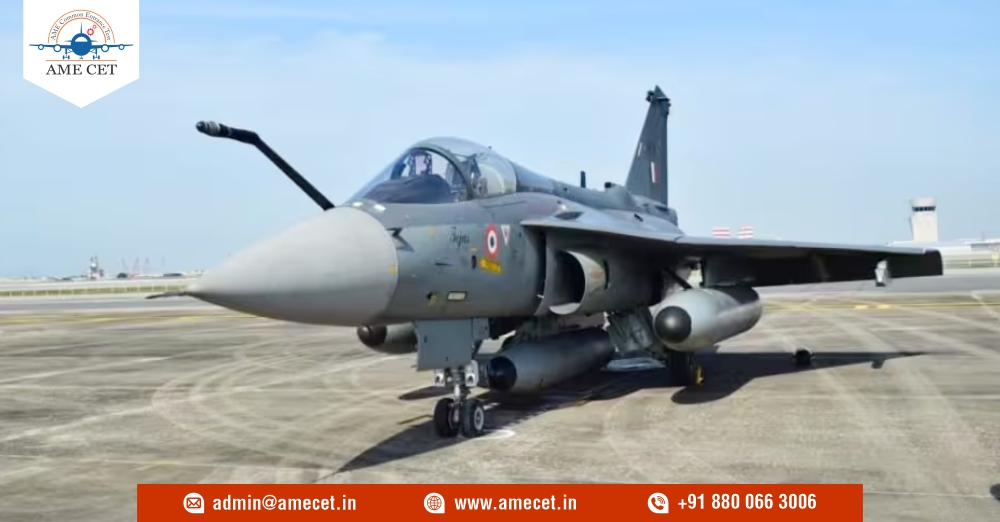
India's Tejas Mk 2 light combat aircraft (LCA), which has faced delays, is expected to make its first flight in 2025 with an American engine. GE Aerospace has signed a deal with Hindustan Aeronautics Limited (HAL) to produce fighter jet engines. Around 200 Tejas Mk 2 fighters will be built. The project has received clearance from the Cabinet Committee on Security. The aircraft will feature indigenous components, including advanced radar systems and weapons. It will be larger than its predecessor, Tejas Mk 1, with enhanced capacity, avionics, range, and weapon carrying capability. A trainer version may be considered in the future.
The development and readiness of the Tejas Mk 2 aircraft for its first flight by 2025, as well as the HAL-GE Aerospace deal, can potentially offer significant career opportunities for students interested in aerospace engineering, aviation, and related fields. Here are some potential career opportunities that could arise from these developments:
-
Aerospace Engineering: Students pursuing a degree in aerospace engineering could find opportunities to work on the development, design, and testing of the Tejas Mk 2 aircraft. This might involve roles in aerodynamics, structural design, avionics, propulsion systems, and more.
-
Aircraft Manufacturing and Assembly: As the Tejas Mk 2 moves towards its first flight and eventual production, there will likely be increased demand for skilled professionals in aircraft manufacturing and assembly. Students with skills in production engineering, quality control, and manufacturing processes could find rewarding careers in this area.
-
Research and Development: The advancements made in the Tejas Mk 2 program could lead to further research and development initiatives. Students with a strong interest in research could explore opportunities in areas such as advanced materials, aerodynamics, propulsion technology, and more.
-
Avionics and Systems Integration: Avionics play a crucial role in modern aircraft, and students with expertise in electronics, communication systems, navigation, and systems integration could find roles in developing and integrating avionic systems for the Tejas Mk 2.
-
Flight Testing and Certification: Once the Tejas Mk 2 is ready for flight testing, there will be a need for flight test engineers, pilots, and professionals involved in certification processes. Students interested in aviation safety, testing, and regulatory compliance could consider careers in this field.
-
Maintenance, Repair, and Overhaul (mro): As the Tejas Mk 2 enters operational service, there will be a demand for professionals skilled in aircraft maintenance, repair, and overhaul. Students with expertise in aircraft maintenance engineering could find opportunities in both military and commercial sectors.
-
Program Management: Large aerospace projects like the Tejas Mk 2 require effective project management to ensure they stay on schedule and within budget. Students with strong organizational and management skills could pursue careers in program management within aerospace companies.
-
Supplier and Logistics Management: The HAL-GE Aerospace deal might involve supply chain management and logistics aspects. Students with an interest in supply chain, procurement, and logistics could explore career opportunities in this area.
the aerospace industry is diverse and offers a wide range of career paths. It's essential for students to align their interests, skills, and educational background with the specific areas that intrigue them the most. Staying updated with industry news and developments, networking with professionals in the field, and seeking internships or cooperative education opportunities can all contribute to building a successful career in aerospace.
Category
-
Aircraft Maintenance Engineering (DGCA) (62)
-
(268)
-
Cabin Crew (1)
-
Aerospace Engineering (3)
-
Aeronautical Engineering (2)
-
Airport Management (5)
-
Aircraft Maintenance Engineering (EASA) (6)
-
Airport Ground Staff (1)
-
Commercial Pilot License(CPL) (51)
-
Aircraft Maintenance Engineering (BTech/BE) (1)
-
B.Sc. in Aviation (1)
-
AME CET (5)