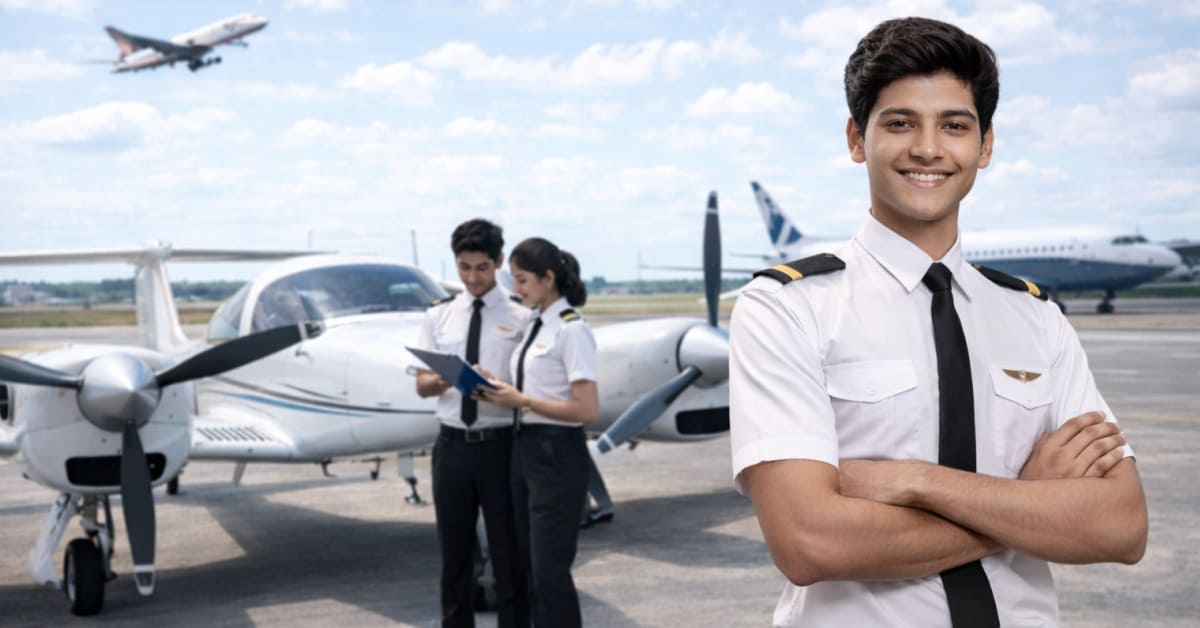
What type of aircraft will I be trained on?
Posted on : 17 March, 2026 05:18 pm
If youre thinking about becoming a pilot, one of the earliest questions youre sure to want to ask is: "What kind of aircraft will I be learning to fly?" Its a vital question because the aircraft you learn on has a big influence on your learning process, safety, flying skills, and career as a professional pilot. Lets discuss this topic in greater detail with a focus on the various types of aircraft, their uses in training, and the reasons they are selected by flight schools globally.
1. Introduction to Training Aircraft
What Is a Training Aircraft?
A training aircraft is a light, small, and dependable airplane used exclusively for the purpose of flight instruction. These aircraft are:
- Easy to maneuver,
- Low-cost to maintain,
- Basic in design, and
- Fitted with dual controls so that instructor and student can both fly.
Single-engine piston aircraft are used by most flight schools for basic training, particularly for Private Pilot License (PPL) and occasionally for Commercial Pilot License (CPL) as well.
2. Popular Aircraft Employed in Pilot Training
A. Cessna 152
The Cessna 152 is one of the most popular two-seat trainer planes worldwide.
Main Features: High-wing configuration Two-seat setup Stable and forgiving handling Fixed tricycle undercarriage
Why its used: Perfect for beginner students Cheap to run Very reliable Ideal for practicing takeoffs/landings and basic maneuvers
B. Cessna 172
The Cessna 172 Skyhawk is the worlds best-selling training aircraft and is often used for PPL and even CPL.
Key Features: Four places (can carry passengers or instructor + student + observer) High-wing design for improved downward visibility Simple avionics (with a few equipped with modern glass cockpits)
Why its used: Flexible and readily available Outstanding stability and control Good for cross-country flight Instrument and night flight training useful
C. Piper PA-28 Series (Cherokee, Archer, Warrior)
The Piper PA-28 series is a group of low-wing single-engine aircraft that are widely employed for initial and intermediate training.
Characteristics: Low-wing construction Side-by-side seating of 2-4 persons Fixed landing gear Good visibility and smooth flight characteristics
Why its used: Improved crosswind performance with wing location Suitable for extended training periods Popular in the USA, Europe, and Asia
D. Diamond DA20/DA40
Diamond aircraft are composite, modern aircraft commonly employed at European and advanced flight schools.
Key Features: Composite materials (lightweight and strong) Glass cockpits (Garmin G1000 avionics) Low-wing design
Why its used: Modern instrumentation prepares students for airline-style cockpits Economical fuel use Excellent flight characteristics and safety features
E. Tecnam P2002/P2006T
Tecnam is an Italian company that builds high-quality training aircraft.
Key Features: The P2002 is a single-engine trainer The P2006T is a twin-engine trainer (commonly employed for multi-engine ratings)
Why its used Lightweight with contemporary design Ideal for both PPL and multi-engine training Low maintenance costs
3. Multi-Engine Training Aircraft
After students pass primary training and approach CPL or ATPL, they must train on multi-engine aircraft to learn the intricacies of flying more powerful and faster planes.
A. Piper PA-34 Seneca
A popular multi-engine aircraft for advanced training.
- Characteristics: Twin engines Retractable landing gear More sophisticated avionics
- Objective: Represents actual commercial aircraft flying conditions Aids in acquiring multi-engine ratings
B. Beechcraft Baron or Diamond DA42
More sophisticated aircraft occasionally utilized by flight schools. Why theyre utilized: Provides high-performance aircraft experience Exposes students to higher workload situations
4. Glass Cockpit vs Analog Cockpit
Numerous contemporary training aircraft currently have glass cockpits, which include electronic flight instrument systems in lieu of conventional analog dials.
- Glass Cockpit Aircraft (e.g., Cessna 172 G1000, Diamond DA40)
- Assists students in adapting to digital navigation and displays
- More similar to airline-style flight decks
- Analog Cockpit Aircraft (e.g., older Cessna 152/172 models)
- Simpler to learn fundamental principles of flight
- Used often for first PPL training
5. Regional Differences in Aircraft
USA Cessna 152, 172, Piper PA-28 are popular FAA-certified aircraft emphasis on general aviation
Europe Diamond DA40, Tecnam, and Piper are more prevalent EASA-approved schools utilize glass-cockpit modern aircraft
Asia & Middle East Variety of aircraft (Cessna, Tecnam, Diamond) Some countries invest in more advanced aircraft for CPL/ATPL training
6. Cost and Maintenance Considerations
Flight schools choose training aircraft based on:
- Fuel efficiency (most use AVGAS 100LL)
- Maintenance costs
- Durability and reliability
- Ease of sourcing spare parts
- Training suitability for different license stages
For example: Cessna 152: cheaper to maintain, great for early training
Diamond DA40: more expensive but better for long-term student training
7. What You’ll Fly at Different Stages
- License Stage Common Aircraft Used PPL (Private Pilot) Cessna 152, Cessna 172, Piper PA-28 CPL (Commercial Pilot) Cessna 172, Diamond DA40, Piper Archer ME Rating Piper Seneca, Diamond DA42, Tecnam P2006T IR (Instrument Rating) Cessna 172 G1000, DA40, Piper Arrow ATPL (Integrated Program) Mix of glass cockpit trainers and simulators
8. Conclusion
All in all, the aircraft that you will be training on will be based on: The license type you are seeking to obtain, The country or school you opt to go with, The modernity level of the fleet, and Your budget. Still, Cessna 172, Piper PA-28, and Diamond DA40 are the most prevalent around the world. As you progress, youll transition to multi-engine aircraft such as the DA42 or Piper Seneca. The training airplanes employed are well selected so that they complement every stage of your training process, from your initial flight to the day you can fly a commercial aircraft.