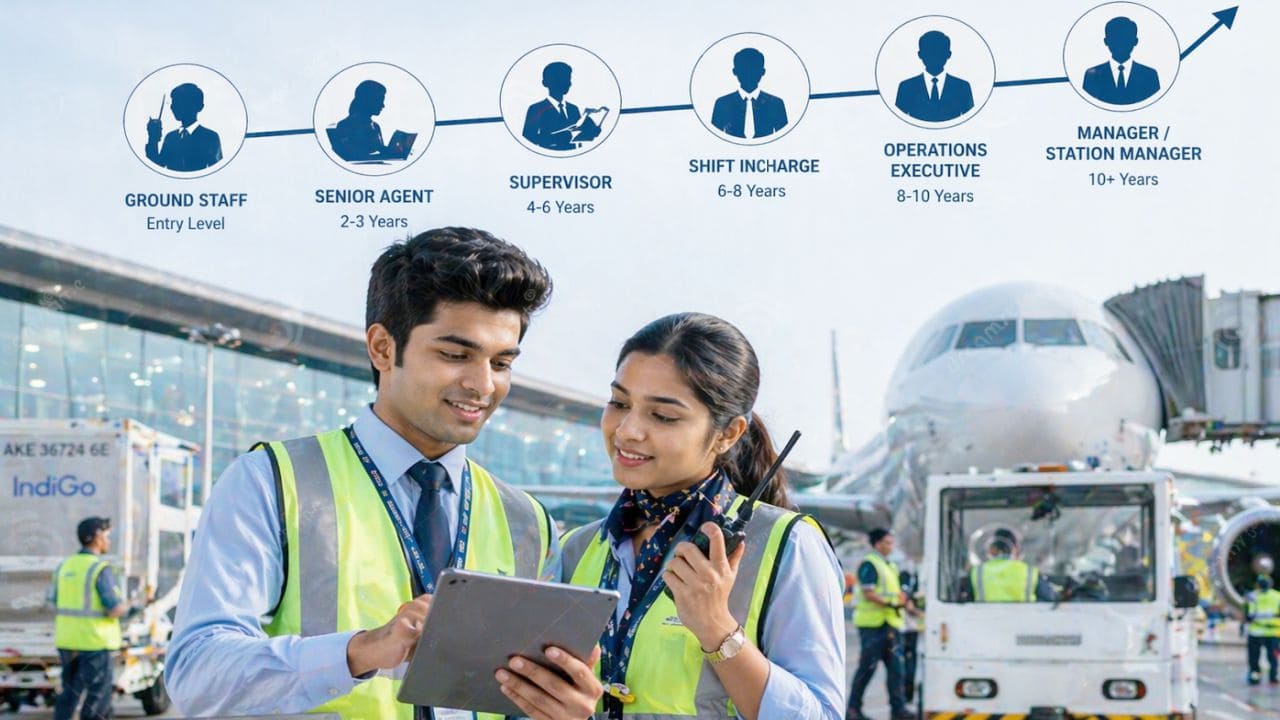
What is the career growth like in ground operations?
Posted on : 24 April, 2026 04:15 pm
Ground operations is a critical part of the transportation and aviation sectors, including a number of tasks that facilitate smooth ground operations of aircraft. From taking care of baggage and cargo to dealing with air traffic control and securing the safety of passengers, ground operations professionals have a critical behind-the-scenes role to play. If you are planning a career in this fast-paced sector, knowing the path of career development is crucial to framing expectations and planning your professional growth. This article delves into career development, skills needed, career advancement opportunities, and industry trends.
1. Understanding Ground Operations
1.1 What Is Ground Operations?
Ground operations cover all the logistical and operational activities that take place on the ground at an airport. These are:
- Aircraft handling (marshalling, towing)
- Baggage and cargo management
- Refueling and maintenance coordination
- Passenger assistance and boarding
- Monitoring for safety and compliance
1.2 Key Employers
Ground operation professionals may work for: Airlines (e.g., Delta, Emirates, Lufthansa) Airport authorities Ground handling companies (e.g., Swissport, Menzies Aviation) Cargo and logistics companies (e.g., FedEx, DHL)
2. Early Career and Entry-Level Positions
2.1 Early Roles
The majority of professionals come into ground operations in entry-level roles with minimal to no experience, including:
- Ramp Agent
- Baggage Handler
- Customer Service Agent
- Aircraft Cleaner
- Loadmaster Assistant
These positions offer basic information regarding airport operations and safety procedures.
2.2 Skills Acquired at This Phase
- Teamwork and communication
- High-pressure decision-making problem-solving
- Time management
- Ground support equipment (GSE) usage
- Fundamental knowledge of airline systems
2.3 Training and Certification
Early training is typically on-the-job, supplemented with certifications like:
- IATA Airport Handling Manual (AHM)
- Dangerous Goods Regulations (DGR)
- AVSEC (Aviation Security)
These certifications can help substantially enhance promotion opportunities.
3. Mid-Level Career Advancement
3.1 Supervisory and Specialist Positions
Once they have obtained 2–5 years of experience, professionals can move into supervisory or specialized positions, including:
- Ramp Supervisor
- Load Controller
- Operations Agent
- Flight Dispatcher
- Customer Service Supervisor
Professionals are now starting to manage teams, make operational choices, and engage with flight crews and air traffic control more intimately.
3.2 Skills for Mid-Level Positions
- Leadership and management of people
- Detailed knowledge of safety rules
- Scheduling and coordination abilities
- Communication involving multiple parties
3.3 Lateral Moves and Diversification
Mid-level professionals can also look at lateral opportunities like:
- Shift Lead in other departments (e.g., cargo, ramp, passenger services)
- Career moves to logistics, planning, or training roles
- Progressions to regional airports or going global
4. Senior-Level and Management Opportunities
4.1 Climbing the Ladder
Senior roles within ground operations tend to demand a balance of experience, technical expertise, and leadership potential. Such roles are:
- Ground Operations Manager
- Airport Operations Coordinator
- Station Manager
- Director of Ground Services
Experts in these roles oversee budgets, comply with regulation, manage crisis, and initiate service enhancement.
4.2 Qualifications Required
Some experts achieve senior status based on experience alone, but others profit from:
- An aviation management, logistics, or business administration degree
- Project management certification (e.g., PMP)
- Leadership training and management
4.3 International Mobility
Large multinational organizations provide the opportunity to shift to operations based outside ones home country, enabling international career development and exposure to diverse operational challenges.
5. Long-Term Career Prospects
5.1 New Opportunities
The logistics and aviation sector is constantly changing, giving rise to new positions in fields like:
- Airport Sustainability Management
- Automation and Technological Integration
- Ground Support Equipment Engineering
- AI-Driven Operational Planning
Experts who keep themselves abreast of industry trends and technological innovations are more likely to benefit in the long run.
5.2 Compensation and Perks
Career development in ground operations also involves a constant hike in salaries, improved work-life balance (in managerial designations), and perks such as:
- Travel benefits
- Performance incentives
- Training and growth programs
6. Most important factors that affect career advancement
6.1 Performance and Dependability
Ground operations is a performance-oriented setting. Punctuality, reliability, and effectiveness are greatly appreciated.
6.2 Networking and Mentorship
Establishing relationships in the company can lead to new doors of opportunities. Mentorship by seasoned leaders also supports career development.
6.3 Continuing Education
Upskilling with courses, certifications, or even part-time diplomas can make a candidate more competitive, particularly when vying for management or supervisory positions.
6.4 Flexibility and Mobility
Availability to relocate or change shifts/jobs can also expedite career growth, particularly for companies that are global or have multiple locations.
7. Challenges and How to Overcome Them
7.1 Physically Demanding Work
Most entry-level ground operation positions are physically demanding. Experts can deal with this by receiving appropriate training as well as maintaining their own health.
7.2 Shift Work and Irregular Hours
Airports operate 24/7, meaning unusual hours are common. Those who adapt to this early find it easier to balance personal life and career later.
7.3 Competition for Promotions
As with any industry, growth can be competitive. Those who proactively seek training, showcase leadership, and maintain a strong work ethic tend to stand out.
8. Final Thoughts: Is Ground Operations a Good Career Path?
Ground operations can be a rewarding and evolving career, particularly for individuals who excel in dynamic, high-speed settings. It has well-defined career tracks for advancement, many opportunities to learn, and the ability to contribute to the aviation industrys critical infrastructure. Whether you dream of running an airports operations or overseeing a team of ramp agents, the road from the tarmac to the top is highly feasible with commitment, ongoing study, and a love for aviation.
