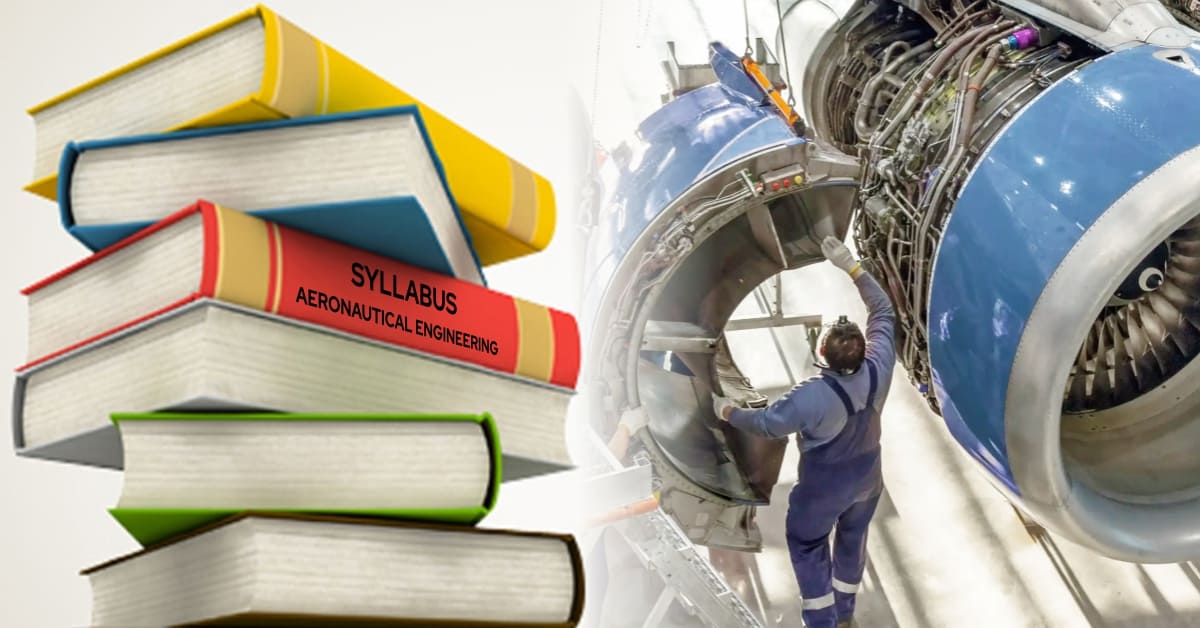
Syllabus of an Aeronautical Engineering Course
Posted on : 25 January, 2026 01:40 pm
Aeronautical engineering is a professional field of study focused on the investigation, planning, development, and servicing of aircraft and aerial vehicles. Aeronautical engineering students study theoretical principles and practical applications that equip them to work in the aviation and aerospace industries. The curriculum is tailored to introduce basic engineering principles and specialized courses in aerodynamics, propulsion, and flight vehicles.
Foundation Subjects
In the early semesters, students learn fundamental engineering and science courses. These provide a foundation for higher-level aeronautical principles.Â
- Some of the fundamental courses are:
- Engineering Mathematics
- Physics and Chemistry
- Engineering Mechanics
- Basic Electrical and Electronics Engineering
- Introduction to Computer Programming These courses create a solid analytical foundation necessary for comprehending intricate aviation systems.
Fundamental Aeronautical Courses
As the studies continue, the course curriculum brings in fundamental aeronautical engineering courses. These courses constitute the core of the course:
- Aerodynamics:- Air flow around aircraft, lift, drag, stability.
- Aircraft Structure:- Material analysis and structural elements in aircraft construction.
- Propulsion Systems:- Jet engine, turbine, and propulsive mechanism.
- Flight Mechanics:- Physics that governs the motion, control, and performance of aircraft.
- Avionics:- Electrical and electronic systems in contemporary aircraft. These courses provide students with the technical skills necessary for aircraft design and operation.
Specialized Electives
In later semesters, students may choose elective subjects to focus on particular areas of interest. Popular electives include:
- Space Technology
- UAV and Drone Technology
- Computational Fluid Dynamics (CFD)
- Aircraft Maintenance and Safety
- Rocket Propulsion Electives allow students to gain expertise in emerging fields and adapt to industry trends.
Laboratory and Practical Training
Hands-on training forms an important part of the syllabus. Students engage in experiments and simulations through:
- Aerodynamics Lab (wind tunnel testing)
- Propulsion Lab (engine performance analysis)
- Aircraft Structures Lab
- CAD/CAM and Simulation Lab Practical sessions bridge the gap between theoretical knowledge and real-world applications.
Projects, Internships, and Seminars
Most aeronautical engineering programs include final-year projects, internships, and technical seminars. Students are encouraged to work on aircraft design, prototype development, or research-based projects. Internships in aviation companies provide industry exposure and skill enhancement.
Duration and Structure
Typically, a bachelors degree in aeronautical engineering spans four years, divided into eight semesters. Each semester combines theory, practicals, and assessments to ensure holistic learning. The syllabus of an aeronautical engineering course is comprehensive, combining basic sciences, core subjects, electives, and practical training. It is carefully structured to provide students with the knowledge and skills required to succeed in the aviation and aerospace sectors. By the end of the course, graduates are well-prepared to take on roles in research, design, manufacturing, and aircraft maintenance, making it a challenging yet rewarding career path.