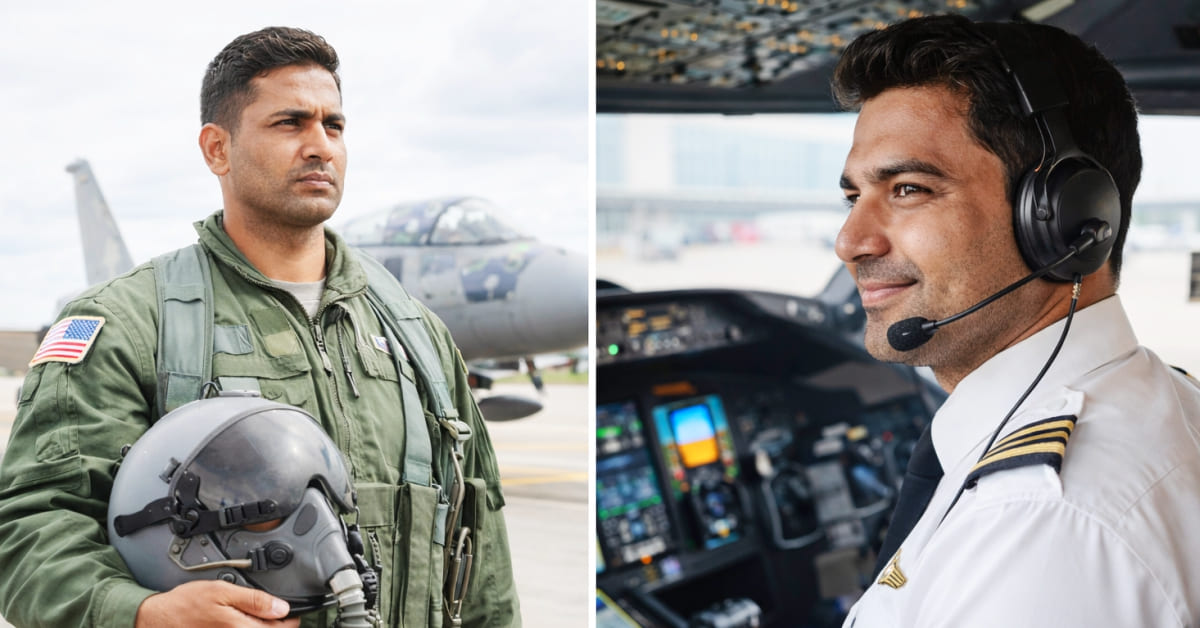
Role of a Military Pilot vs. Commercial Pilot
Posted on : 2 February, 2026 06:06 pm
Flying an aircraft is a dream for many, but the role of a pilot changes significantly depending on whether one chooses a military career or becomes a commercial airline pilot. While both professions demand skill, discipline, and passion for aviation, the purpose, responsibilities, and lifestyle differ greatly. Let’s explore the key distinctions between a military pilot and a commercial pilot.
1. Purpose of Flying
- Military Pilot: Their primary role is to defend the nation, conduct combat missions, surveillance, search-and-rescue operations, and provide aerial support during emergencies or wars. Every flight has a mission tied to national security.
- Commercial Pilot: Their purpose is to safely transport passengers and cargo from one location to another. The focus is on efficiency, comfort, and maintaining strict schedules.
2. Training and Discipline
- Military Pilot: Trained in extreme conditions, they undergo rigorous physical fitness programs, survival training, and advanced combat techniques. The training is not just about flying but also about discipline, leadership, and quick decision-making under pressure.
- Commercial Pilot: Training focuses on civil aviation rules, navigation, meteorology, and aircraft systems. While challenging, it is more structured and centered on safety, passenger comfort, and regulatory compliance.
3. Flying Environment
- Military Pilot: They often fly in unpredictable and high-risk environments, including combat zones, night operations, and extreme weather. Missions may demand split-second maneuvers and extraordinary courage.
- Commercial Pilot: They usually operate in controlled airspace with advanced support systems like ATC (Air Traffic Control). The environment is relatively stable, with safety being the top priority.
4. Aircraft Operated
- Military Pilot: Fly fighter jets, transport aircraft, helicopters, and reconnaissance planes—often equipped with weapons and defense systems.
- Commercial Pilot: Fly airliners such as Boeing or Airbus jets, regional aircraft, or cargo planes designed for transporting people and goods.
5. Career Opportunities
- Military Pilot: Beyond flying, they may take on leadership roles, join special operations, or later transition into commercial aviation with valuable experience.
- Commercial Pilot: They can progress from First Officer to Captain, become trainers, or even take up managerial positions in airlines.
6. Lifestyle and Challenges
- Military Pilot: Life is demanding, unpredictable, and requires frequent relocation. The pride of serving the nation comes with sacrifices in terms of personal life and comfort.
- Commercial Pilot: Offers a more predictable schedule, though long hours, jet lag, and time away from family can still be challenging. However, the career provides financial stability and global exposure.
Both military pilots and commercial pilots play crucial roles in the aviation industry and society. A military pilot protects the skies and ensures national security, while a commercial pilot ensures safe travel and connects people across the world. The choice between the two depends on one’s passion whether it lies in serving the nation with discipline and courage or in building a global career with airlines.