Is B.Sc. in Aviation a Good Course for Pilots?
Posted on : 8 February, 2026 10:07 am
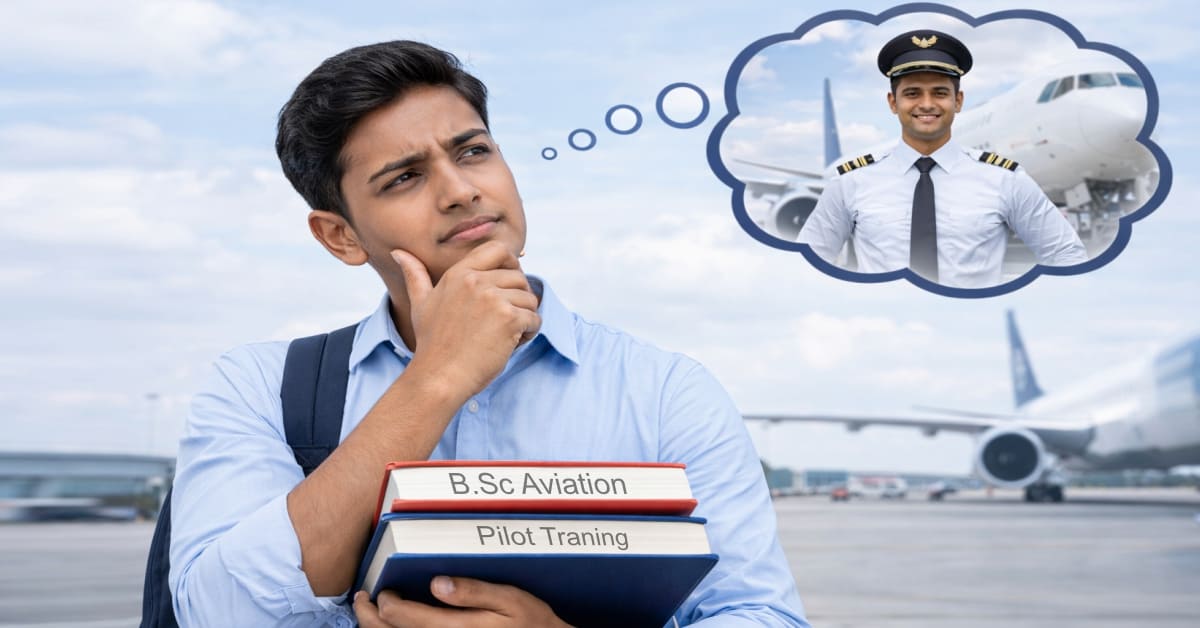
The aviation industry is one of the fastest growing sectors in the world and many students dream of becoming pilots. One of the common questions that arises is: "Is B.Sc. in Aviation a good course for aspiring pilots?" The answer depends on your career goals, financial planning and the pathway you want to take.
What is B.Sc. in Aviation?
B.Sc. in Aviation is a 3 years undergraduate degree that covers aviation science, meteorology, aircraft operations, navigation, air traffic control and airport management. It gives students a solid academic foundation in aviation while opening multiple career opportunities.
Benefits for Aspiring Pilots
- Strong Knowledge Base: The course builds technical understanding of aircraft, flight operations and aviation systems, which helps in flight training.
- Higher Studies Option: After graduation, students can pursue pilot training programs or MBA in Aviation Management.
- Backup Career: Even if pilot training doesnt work out due to cost or medical fitness, graduates can work in other aviation roles such as airport management, flight dispatch or safety management.
- Global Opportunities: Many international airlines prefer candidates with both a degree and pilot training, making B.Sc. in Aviation graduates more competitive.
- Networking in Aviation Industry: Students interact with industry professionals, aviation trainers, and experts during the course, which can help in securing pilot opportunities later
Limitations of B.Sc. in Aviation for Pilots
- Not a Direct License: The degree itself does not qualify you as a pilot. You will still need to complete Commercial Pilot License (CPL) training from a DGCA approved flying school.
- Extra Cost: Pilot training is expensive (INR25 to 40 lakhs in India, higher abroad), so students must plan finances after completing B.Sc.
- Time Factor: Combining a 3 years degree with pilot training takes longer compared to directly enrolling in flying school after 12th.
- Medical Fitness Still Required: Even with a degree, you cannot become a pilot if you fail the mandatory DGCA Class 1 medical test.
- Additional Certifications Needed: Beyond CPL, you may still need type rating (training for specific aircraft) which adds more cost and time.
Salary & Career Scope
| Pathway | Requirement | Career Growth | Salary Range |
|---|---|---|---|
| B.Sc. in Aviation + CPL | 3 year degree + pilot training | Pilot, Captain, Airline Instructor | INR12 to 50 LPA+ |
| Only CPL after 12th | Pilot training only | Pilot, Captain | INR12 to 50 LPA+ |
| B.Sc. in Aviation (without CPL) | No pilot license | Airport Manager, ATC, Aviation Safety Officer | INR4 to 15 LPA |
B.Sc. in Aviation is a good course for aspiring pilots if you want a strong academic foundation and a backup career option in aviation. However, it is not mandatory to become a pilot. If your sole goal is to fly, you can directly enroll in CPL training after 12th. But if you prefer a degree + pilot training route with broader opportunities, then B.Sc. in Aviation is a smart choice.