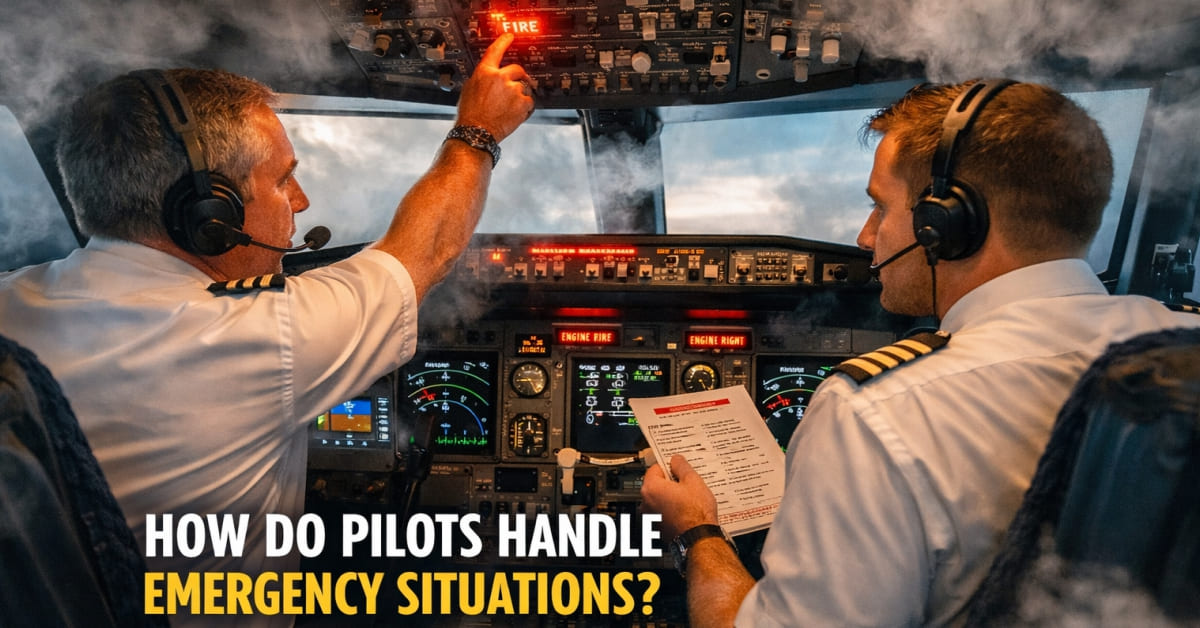
How Do Pilots Handle Emergency Situations?
Posted on : 3 February, 2026 04:57 pm
Flying is considered one of the safest ways to travel, but emergencies can still happen due to technical issues, weather, or medical situations. The main difference in aviation is how pilots are trained to deal with such challenges. Pilots undergo extensive emergency training in simulators, where they practice handling engine failures, bird strikes, cabin depressurization, and more. They follow Standard Operating Procedures (SOPs) and work as a team with co-pilots, cabin crew, and air traffic control to ensure quick and safe decisions. Above all, pilots are trained to stay calm under pressure and prioritize passenger safety. Their discipline and preparation make air travel one of the most secure experiences, even during unexpected emergencies.
1. Rigorous Emergency Training
Pilots go through simulator training where they practice a wide variety of emergency scenarios, such as engine failure, cabin depressurization, bird strikes, or bad weather. These simulators recreate real-life conditions, allowing pilots to practice calm decision-making under pressure.
2. Following Standard Operating Procedures (SOPs)
Every airline and aviation authority sets clear guidelines called SOPs. In emergencies, pilots follow these step-by-step checklists to make quick yet accurate decisions. This reduces panic and ensures no crucial step is missed.
3. Communication and Teamwork
Pilots work closely with air traffic control (ATC), the co-pilot, and cabin crew. For example:
- The captain may fly the plane,
- The first officer may handle communication and checklists,
- The cabin crew prepares passengers for safety.
This coordination is vital in emergencies.
4. Passenger Safety Comes First
- In every situation, the primary duty of a pilot is passenger safety. Whether its a medical emergency on board or an engine issue, pilots prioritize landing the aircraft safely as soon as possible.
5. Staying Calm Under Pressure
- One of the most important skills pilots develop is composure. They are trained not to panic, but to assess, plan, and act. This calmness reassures passengers and helps solve the problem effectively.
6. Real-Life Examples
A famous example is the "Miracle on the Hudson" in 2009, where Captain Chesley Sullenberger safely landed a plane on a river after a bird strike caused dual engine failure. This incident proved the importance of training and calm decision-making.Emergencies in aviation are rare, but pilots are always prepared. Through simulator practice, teamwork, strict procedures, and calmness under stress, they ensure that passengers reach safety even in the toughest circumstances. For students dreaming of becoming pilots, remember courage, discipline, and preparation are the keys to handling emergencies in the sky.