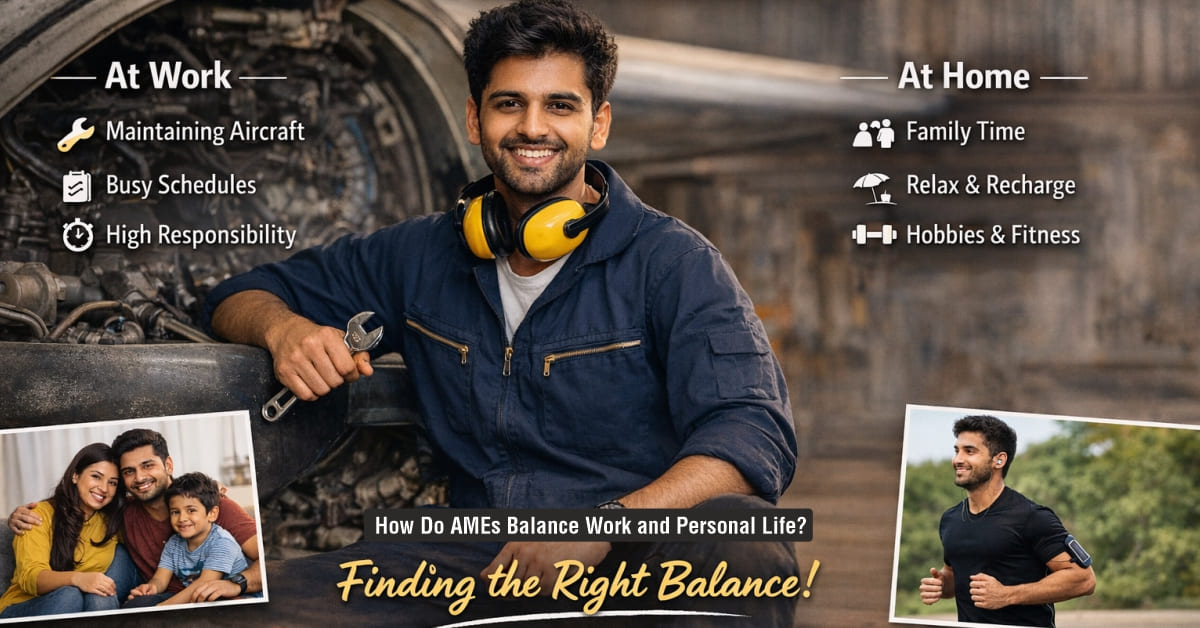
How Do AMEs Balance Work and Personal Life?
Posted on : 7 March, 2026 11:49 am
An Aircraft Maintenance Engineer (AME) plays one of the most crucial roles in aviation. Their responsibility is to ensure that every aircraft taking off is safe and airworthy. With such high responsibility, the job often demands long hours, irregular shifts, and immense focus. In such a scenario, maintaining a healthy work-life balance becomes both challenging and essential.
Challenges of an AMEs Job
- The work of an AME is not like a regular 9-to-5 job.
- They often have to work at night, on weekends, or even on holidays during peak flight schedules.
- Every inspection demands complete concentration, as even a small error can impact safety.
- The high responsibility can create stress and physical fatigue.
- Due to busy schedules, AMEs may get limited time for family and personal life.
- Weather conditions, such as extreme heat or cold, can add to job challenges.
- AMEs must constantly update their skills to keep up with new aircraft technology.
- Sudden technical issues may require immediate attention, extending their working hours.
- Shift changes can disturb sleep patterns, affecting overall health.
- Despite these challenges, AMEs feel pride in ensuring safe flights for passengers.
Strategies for Balance
Despite these challenges, many AMEs successfully balance their professional and personal lives.
- Time Management: AMEs learn to prioritize tasks and use their free hours wisely. Small breaks and proper planning help them avoid unnecessary overtime.
- Healthy Lifestyle: Maintaining physical and mental fitness is essential. Regular exercise, a balanced diet, and proper sleep help AMEs stay energetic and stress-free.
- Teamwork and Support: AMEs often work in teams, sharing responsibilities during tough schedules. This not only reduces workload but also creates a sense of mutual support.
- Personal Boundaries: Making time for family, hobbies, or relaxation is equally important. Many AMEs ensure they dedicate at least some part of their day to personal well-being.
Employers Role
| Employers Initiative | How It Helps AMEs |
|---|---|
| Rotational Shifts | Prevents burnout and ensures AMEs dont get stuck with continuous odd-hour schedules. |
| Wellness Programs | Provides counselling, stress management, and health activities for mental well-being. |
| Adequate Rest Between Duties | Helps AMEs recover physically and mentally, ensuring focus during critical inspections. |
| Employee Recognition | Boosts motivation and makes AMEs feel valued for their responsibility in aviation. |
| Training and Development | Keeps AMEs updated with latest technology, reducing work stress and building confidence. |
Real-Life Perspective
- Many AMEs share that balancing work and personal life requires adapting to aviations unique lifestyle. The job can be demanding, with irregular hours and great responsibility, but the sense of pride in ensuring passenger safety makes it deeply rewarding. By maintaining discipline, planning their time carefully, and focusing on health, AMEs manage both career and personal well-being. Even during busy schedules, they create space for family, relaxation, and hobbies, proving that balance is possible with the right approach.
Being an AME is owing rather than a job and severity of duty to uphold safe skies. There is no doubt the challenges and rigors are real, however, there are also rewards. If an AME is intentional about time management and respecting their health, well-being, asking for help when needed, and setting boundaries with regards to personal and work time, then maintaining a work-life balance is possible within AME practice. An AME will not only feel better, personally and professionally, for accepting a balanced work-life approach, but also will be more likely to be effective in their vocational calling to be keepers of aviation safety.