How Artificial Intelligence is Changing Pilot Training?
Posted on : 22 January, 2026 06:28 pm
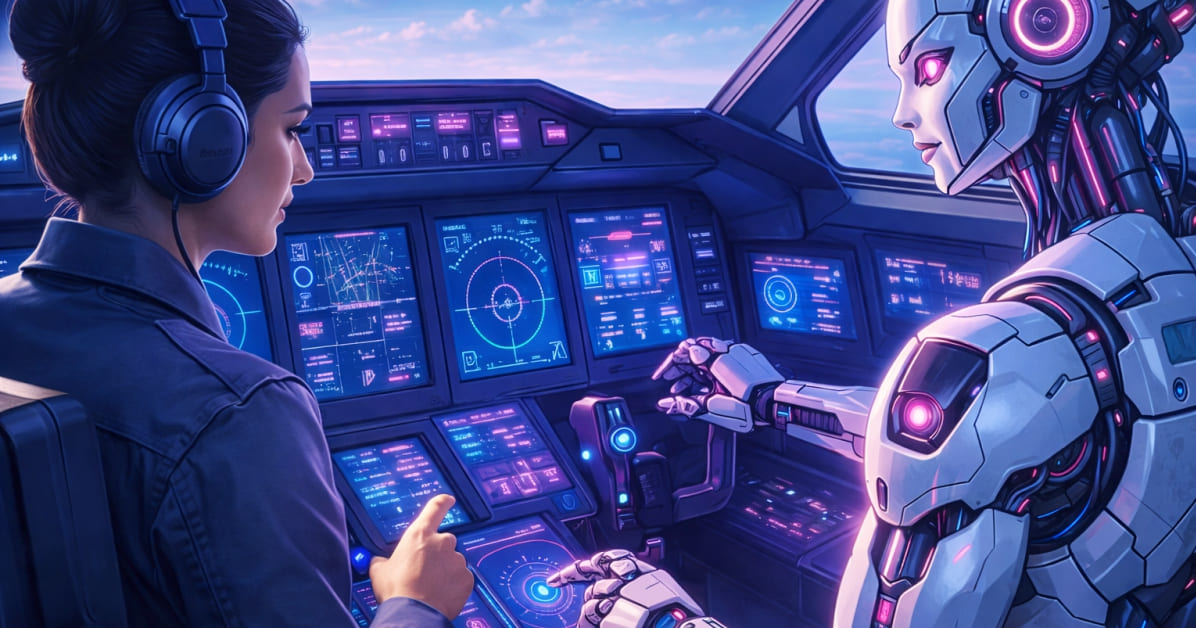
Aviation has always been at the forefront of adopting new technologies, and now Artificial Intelligence (AI) is bringing a revolution in pilot training. From advanced flight simulators to personalized learning experiences, AI is reshaping how pilots are trained, tested, and prepared for real-world challenges. LetâÂÂs explore the key ways in which AI is transforming pilot training.
1. Smarter Flight Simulators
Traditional simulators provided limited scenarios, but AI-powered simulators can replicate realistic and unpredictable flight conditions.
- They simulate turbulence, emergency landings, and complex weather in real time.
- AI learns from past training sessions and adapts the simulator to test a pilotâÂÂs weak areas.
- This ensures that trainees experience diverse situations before they step into an actual cockpit.
2. Personalized Learning for Every Student
Every pilot has different strengths and weaknesses. AI helps create a customized training program by analyzing each traineeâÂÂs performance.
- If a student struggles with crosswind landings, AI introduces more such scenarios.
- Students who excel in certain maneuvers can move faster through those modules.
- This adaptive learning saves time and improves efficiency.
3. Real-Time Performance Feedback
AI systems track hundreds of flight parameters simultaneouslyâÂÂspeed, altitude, control usage, and reaction time.
- Trainees receive instant feedback on their mistakes.
- Instead of waiting for instructor evaluation, AI highlights errors immediately.
- This helps students learn faster and retain better.
4. Predictive Analysis of Pilot Skills
AI can predict how a pilot might respond in critical conditions.
- By analyzing past performance, it identifies potential risks in handling emergencies.
- Instructors can then focus training on those specific weak points.
- This proactive approach enhances safety and builds confidence.
5. Enhancing Safety Training
One of the biggest advantages of AI is preparing pilots for rare but dangerous scenarios like engine failures, bird strikes, or mid-air turbulence.
- AI simulates these situations with near-real accuracy.
- Pilots get hands-on experience handling emergencies without real-life risks.
- This significantly improves decision-making under pressure.
6. Virtual Reality (VR) and Augmented Reality (AR) Integration
AI combined with VR/AR creates immersive learning environments.
- Students can practice cockpit controls, navigation, and air traffic communication virtually.
- AR overlays critical flight information during training for a more realistic experience.
- This makes complex concepts easier to understand.
7. Reducing Training Costs and Time
Pilot training is expensive, often costing âÃÂù35âÂÂ50 lakhs in India. AI helps reduce costs by:
- Minimizing the need for repeated flight hours in real aircraft.
- Speeding up learning through adaptive training.
- Allowing students to practice safely in AI-driven simulators before actual flying.
8. Continuous Learning for Licensed Pilots
AI is not just for traineesâÂÂit also supports experienced pilots.
- Airlines use AI-based refresher programs to keep pilots updated on new aircraft technologies.
- It helps in monitoring fatigue and alertness levels during long-haul flights.
- This ensures safer skies and more confident pilots.
The Future of AI in Pilot Training
The aviation industry is rapidly moving towards AI-driven smart academies where simulators, analytics, and real-time monitoring will replace outdated methods. In the future:
- AI may evaluate pilots during recruitment.
- Training could be entirely customized using wearable devices that track stress and focus.
- With global demand for pilots rising, AI will play a critical role in producing skilled professionals faster and more efficiently.
Artificial Intelligence is not just a toolâÂÂit is a game-changer in pilot training. By providing personalized learning, advanced simulators, real-time feedback, and predictive safety measures, AI is making pilot training faster, safer, and more effective. For students dreaming of a career in aviation, embracing AI-based training methods will give them a competitive edge in the coming years.