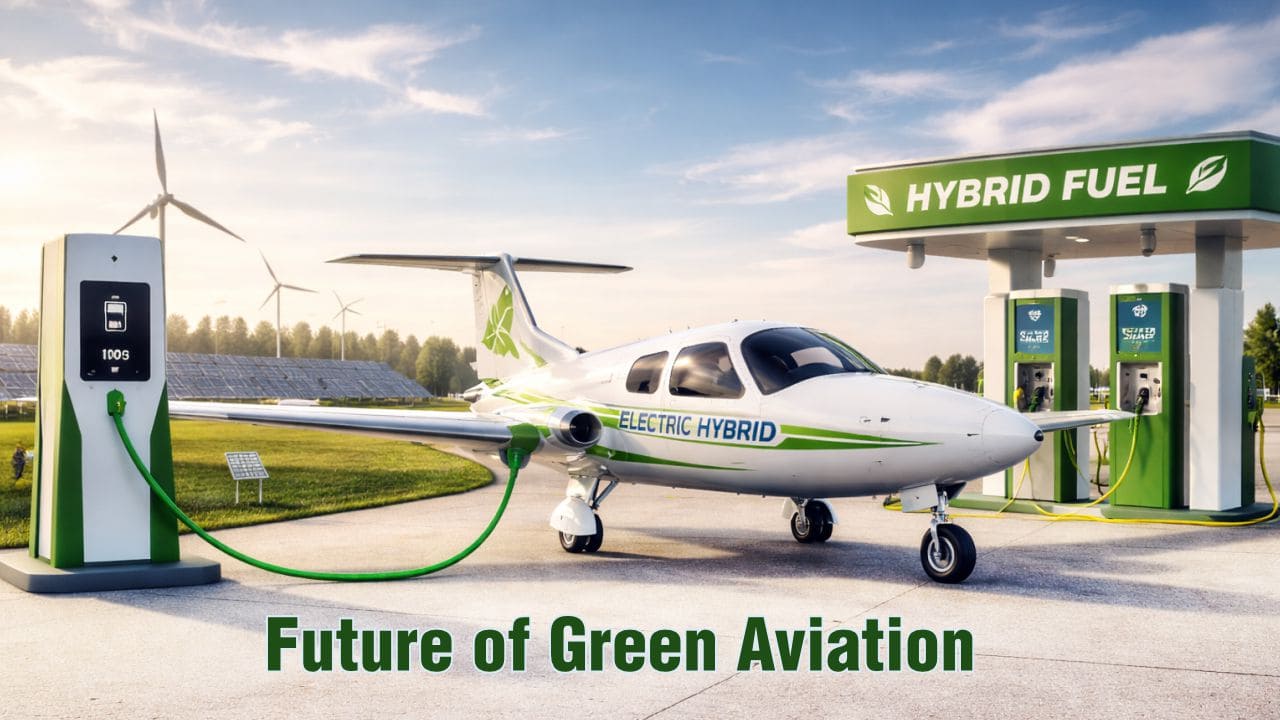
Electric and Hybrid Aircraft Is the Future of Green Aviation Here?
Posted on : 22 April, 2026 11:24 am
The aviation industry is undergoing a revolutionary shift as it faces growing pressure to reduce carbon emissions and embrace sustainable solutions. With climate change and environmental responsibility at the forefront of global discussions, electric and hybrid aircraft have emerged as promising innovations. But the question remains: Is the future of green aviation already here, or is it still on the horizon?
The Need for Green Aviation
Aviation contributes nearly 2-3% of global COâ emissions, and this figure is expected to rise as air travel demand continues to grow. Governments, regulators, and passengers are pushing the industry to adopt eco-friendly alternatives. Traditional jet fuel is not sustainable in the long run, which has paved the way for exploring electric propulsion and hybrid power systems as viable solutions.
Electric Aircraft: A Promising Breakthrough
Electric aircraft rely on battery-powered systems instead of conventional jet fuel engines. Companies such as Eviation (Alice), Pipistrel, and Airbus are developing fully electric prototypes that aim to reduce emissions, noise pollution, and operating costs.
-
Benefits of Electric Aircraft:
- Zero in-flight carbon emissions.
- Lower noise levels, making them ideal for urban air mobility.
- Reduced operating and maintenance costs due to fewer moving parts.
However, the challenge lies in battery technology. Current batteries cannot provide the same energy density as jet fuel, which limits electric aircraft to short-haul flights of 200-400 miles. Large-scale adoption for long-haul international travel is still years away, pending major breakthroughs in battery efficiency.
Hybrid Aircraft: A Practical Transition
Hybrid aircraft combine traditional fuel engines with electric propulsion, offering a middle ground between sustainability and performance. They can operate on electric power during takeoff and landing, while conventional engines take over for longer cruising phases.
Major players like Airbus, Boeing, and Rolls-Royce are investing in hybrid-electric designs, viewing them as a practical solution until full electrification becomes feasible. Hybrid models are expected to cut fuel consumption by 30-50%, significantly reducing emissions while maintaining longer range capabilities.
Industry Adoption and Ongoing Projects
Governments and private investors are backing green aviation projects worldwide:
- The European Unions "Flightpath 2050" initiative aims for a 75% reduction in COâ emissions by mid-century.
- NASAs X-57 Maxwell is a pioneering electric aircraft project under testing.
- Airlines such as United, EasyJet, and Scandinavian Airlines are partnering with startups to incorporate electric or hybrid aircraft into their future fleets.
These initiatives highlight the aviation sectors serious commitment to sustainability and innovation.
Challenges to Overcome
Despite the promise, several challenges remain:
- Battery Limitations: Current energy density restricts flight range.
- High Development Costs: Research and manufacturing require billions in investment.
- Infrastructure Requirements: Airports must adapt with charging stations and new maintenance systems.
Conclusion
Electric and hybrid aircraft represent the future of green aviation, but the transition will be gradual. Hybrid models are likely to see mainstream adoption within the next two decades, while fully electric commercial aircraft may take longer to achieve global scalability. What is clear is that the journey toward sustainable aviation has already begun. With continuous innovation, collaboration, and policy support, the vision of quieter, cleaner, and greener skies is not just a possibility-it is an inevitable future.
