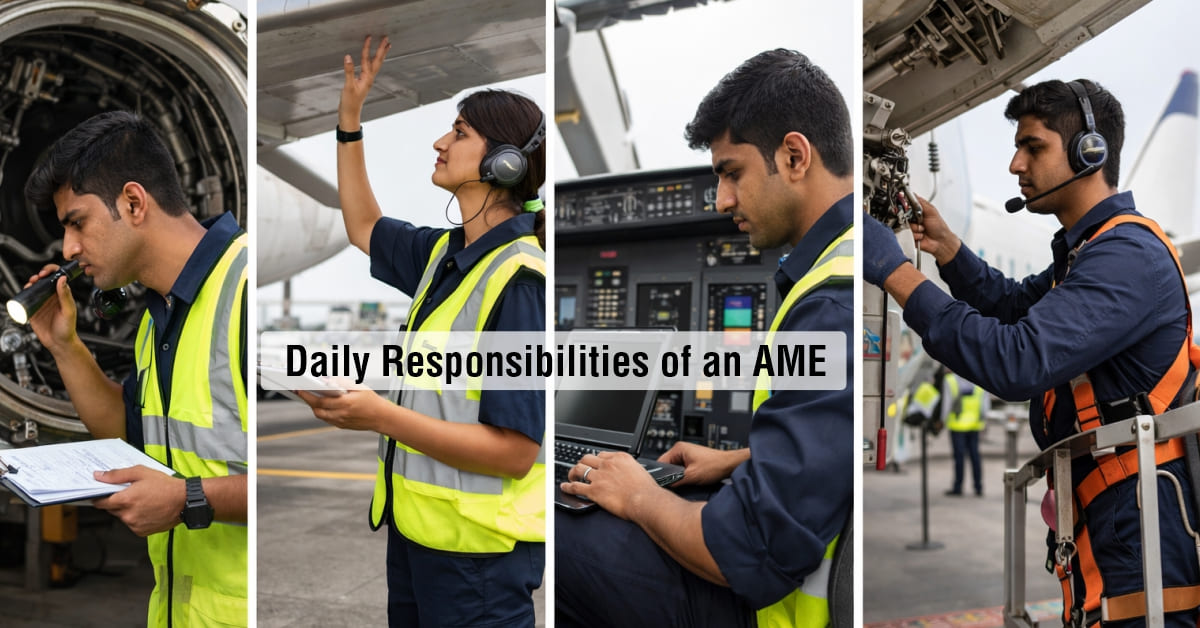
Daily Responsibilities of an AME
Posted on : 27 March, 2026 03:40 pm
The aviation industry functions on the foundation of safety, precision, and reliability. At the core of this responsibility lies the Aircraft Maintenance Engineer (AME). Their daily tasks go far beyond mechanical checks - they ensure every aircraft is safe, airworthy, and ready to fly passengers or cargo with complete confidence.
Here are some key responsibilities:
- Pre-Flight Inspections
- Post-Flight Inspections
- Troubleshooting and Repairs
- Scheduled Maintenance
- Compliance with Safety Regulations
- Documentation and Reporting
- Team Collaboration
- Emergency Handling
- Continuous Learning
Pre-Flight Inspections
One of the most important duties of an AME is to conduct pre-flight inspections. Before a plane takes off, engineers thoroughly check the aircrafts critical systems, including engines, avionics, landing gear, and hydraulics. These routine checks help identify potential issues that could compromise safety, ensuring that every flight begins on a secure foundation.
Post-Flight Inspections
Once the aircraft has landed, post-flight inspections are carried out. AMEs examine the systems for wear, damage, or malfunctions that may have occurred during the journey. Any irregularities are recorded, and immediate corrective actions are planned to prevent further risks.
Troubleshooting and Repairs
Aircraft often face unexpected technical issues. An AME is responsible for identifying faults and carrying out the necessary repairs. From engine problems to avionics malfunctions, their expertise ensures that problems are quickly resolved, minimizing delays and ensuring passenger safety.
Scheduled Maintenance
In addition to daily inspections, aircraft follow a strict maintenance schedule set by aviation authorities. AMEs perform detailed checks, replacements, and overhauls at specific intervals. This preventive approach helps extend the aircrafts lifespan and reduces the chances of in-flight technical failures.
Compliance with Safety Regulations
Aviation is one of the most regulated industries in the world. AMEs must strictly follow the rules and procedures set by the Directorate General of Civil Aviation (DGCA) and international authorities. This compliance ensures that aircraft maintenance meets global safety benchmarks.
Documentation and Reporting
Every action performed by an AME is documented. Maintenance logs, inspection records, and certification reports are essential for tracking the aircrafts health. By signing off on these documents, AMEs officially declare that an aircraft is fit for flight, carrying immense responsibility on their shoulders.
Team Collaboration
AMEs do not work in isolation. They collaborate with pilots, engineers, and ground staff to ensure smooth operations. Clear communication is vital, as even the smallest error can affect the safety and timing of flights.
Emergency Handling
There are moments when aircraft face unexpected technical issues. In such cases, AMEs must act swiftly, analysing the situation and implementing solutions under pressure. Their decisions can directly impact the safety of passengers and crew.
Continuous Learning
The aviation industry is constantly evolving with new technologies and regulations. To stay relevant, AMEs undergo continuous training and skill development. This ensures they are prepared to handle modern aircraft systems and the latest safety standards. The daily responsibilities of an AME demand precision, dedication, and accountability. From inspections and repairs to documentation and compliance, their work ensures the safe and smooth functioning of air travel. Without AMEs, the skies would not be as safe as they are today.
