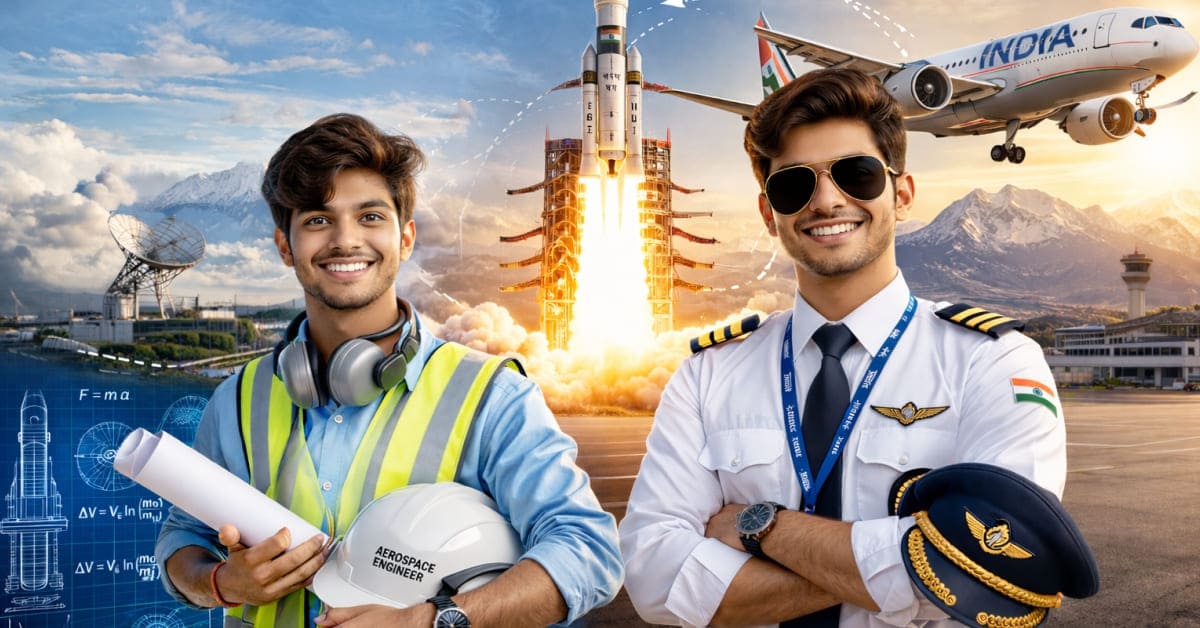
Can Aerospace Engineers Become Pilots?
Posted on : 1 April, 2026 04:04 pm
When students think about aerospace engineering, they often picture designing aircraft, rockets, or satellites. On the other hand, becoming a pilot is about flying and operating these machines. Interestingly, many wonder—can aerospace engineers also become pilots? The answer is yes, but with some extra steps.
Understanding the Roles
An aerospace engineer designs, tests, and maintains aircraft and spacecraft. They study how planes and rockets fly, engines work, and how materials are used. A pilot, on the other hand, flies the aircraft and makes sure the flight is safe, passengers are secure, and navigation is correct. The roles are different but work together—engineers build the machines, and pilots fly them.
Can Aerospace Engineers Transition to Flying?
Yes, aerospace engineers can definitely become pilots. Having an engineering background actually gives them an advantage, as they already understand aircraft systems, aerodynamics, and mechanics. This technical knowledge can make flight training easier. However, to become a pilot, aerospace engineers must fulfill the same training and licensing requirements as anyone else.
Steps to Becoming a Pilot after Aerospace Engineering
- Medical Fitness Test—Pilots must pass a Class 1 medical examination to ensure they are physically and mentally fit.
- Choose the Type of Pilot Training—Depending on career goals, one may pursue:
- Commercial Pilot License (CPL): For those aiming to fly passenger or cargo planes.
- Private Pilot License (PPL): For personal or hobby flying.
- Military Pilot Training: Through defense recruitment and specialized programs.
- Enroll in a Flying School—Training usually involves 200+ hours of flying for a CPL.
- Pass Written Exams & Flight Tests – These include navigation, air regulations, meteorology, and practical flying assessments.
Advantages for Aerospace Engineers
- Stronger Technical Understanding: Their knowledge of aerodynamics and flight systems makes training smoother.
- Career Flexibility: They can work as engineers, pilots, or even in managerial roles, combining both.
- Research & Testing Roles: Aerospace companies sometimes require test pilots with engineering backgrounds, offering exciting opportunities.
Challenges to Keep in Mind
- Pilot training is expensive, often costing INR30–50 lakhs in India.
- It requires time and dedication, typically 1–2 years for a CPL.
- Engineers need to adapt from a technical, design-focused mindset to operational, safety-first thinking as pilots.
Aerospace engineers can become pilots. Their knowledge of aircraft makes learning to fly easier, but they still need to complete pilot training and get a license. Having both engineering and flying skills can create special job opportunities in airlines, research centers, and defense services. For anyone who loves both designing and flying aircraft, this career path is perfect.
