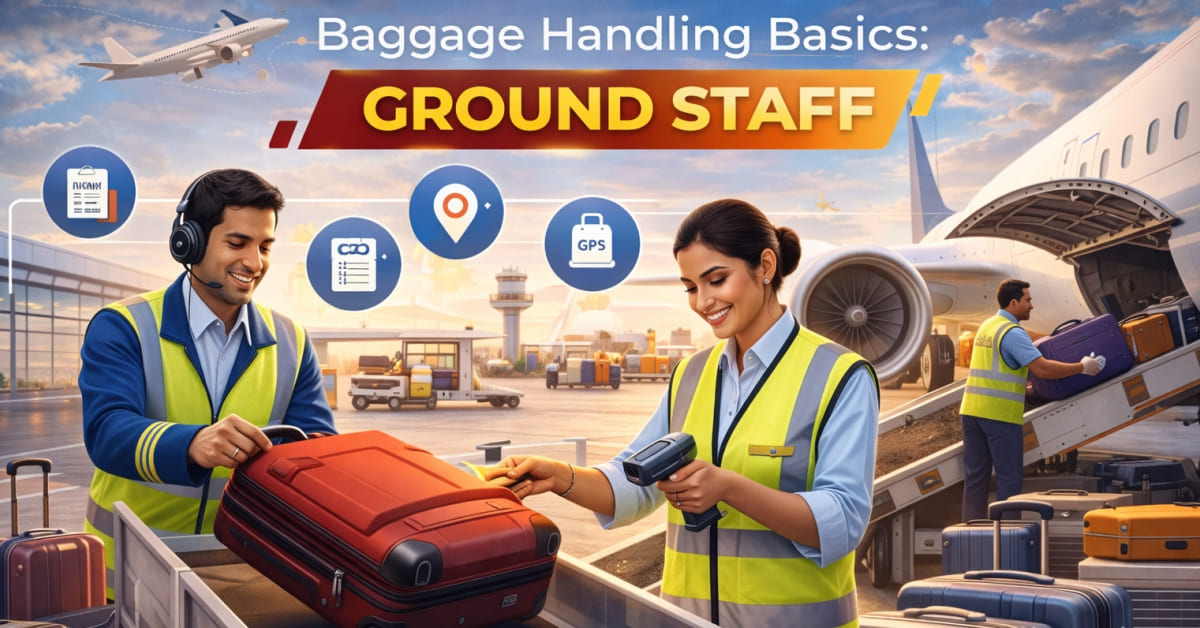
Baggage Handling Basics: Ground Staff
Posted on : 24 February, 2026 06:05 pm
Every smooth flight is a well-organized ground operations team and at the heart of that team is the baggage handling unit. Baggage handling is a crucial responsibility for ground staff, ensuring that customers luggp- transported from check-in to destination.
What is Baggage Handling
Baggage handling refers to the process of managing passenger luggage at various stages of the airport journey, including:
- Check-in and tag generation
- Loading and unloading baggage
- Sorting based on destination
- Transfer between connecting flights
- Delivery to the baggage claim area
A ground staff professional must carry out these tasks quickly, carefully, and according to strict safety and security standards.
Why is Baggage Handling Important
While it may seem like a behind-the-scenes task, effective baggage handling directly affects passenger satisfaction, flight timing, and airline reputation.
Timely Flights
Delays in loading or unloading baggage can hold up entire flights. Efficient baggage handlers help maintain on-time performance.
Passenger Trust
Lost or damaged luggage causes frustration. Proper handling ensures passengers feel their belongings are safe.
Safety Compliance
Baggage handling includes scanning for prohibited items and ensuring unaccompanied bags are flagged. It plays a vital role in airport safety.
Core Skills Required in Baggage Handling
A Ground Staff course often includes a baggage handling module to help students learn and practice these essential skills:
1. Tagging and Sorting
Understanding how to read and generate baggage tags using airline systems (e.g., Amadeus, Sabre) is a must.
2. Manual Handling Techniques
Lifting and placing bags safely to avoid injury—both to the staff and the luggage—is taught using proper posture and equipment.
3. Use of Conveyor Belts and Scanners
Learning to operate conveyor belts, x-ray scanners, and other machinery is essential in modern baggage systems.
4. Communication and Coordination
Baggage handlers work closely with other ground staff and the cockpit crew. Clear communication helps avoid errors and delays.
Career Prospects in Baggage Handling
After completing ground staff training, you can work in roles such as:
- Baggage Handling Agent
- Ramp Agent
- Ground Operations Assistant
- Cargo and Freight Assistant
With experience, one can move into supervisory or logistics coordination roles, especially at busy domestic or international airports. Baggage handling may seem like a basic task, but in reality, it’s a crucial link in the chain of airport mangement . It requires a mix of technical know-how, physical fitness, attention to detail, and teamwork. As part of a ground staff skill-building program, learning baggage handling basics gives you a strong foundation to thrive in the aviation industry.